Expert Series / Natalie Hollobone, Foxy Evergreen
Florals have the power to completely transform a space - setting the tone, evoking emotion and leaving a lasting visual impression long after the celebration ends. For Natalie Hollobone, Founder of Foxy Evergreen, floral design is an art form grounded in individuality, creativity and bold expression.
Known for her vibrant, statement-making arrangements, Natalie works with modern couples who value aesthetics and aren’t afraid to do things differently. Her designs strike a balance between timeless beauty and contemporary edge, resulting in florals that feel both elevated and deeply personal.
With a focus on bespoke design and meticulous execution, Foxy Evergreen has become synonymous with creating immersive floral experiences that not only complement a wedding, but define it. In this edition of The Wedding Series Expert Series, we speak with Natalie about her creative philosophy, evolving trends, and how florals can shape the entire atmosphere of a celebration.
Location - Melbourne, Australia
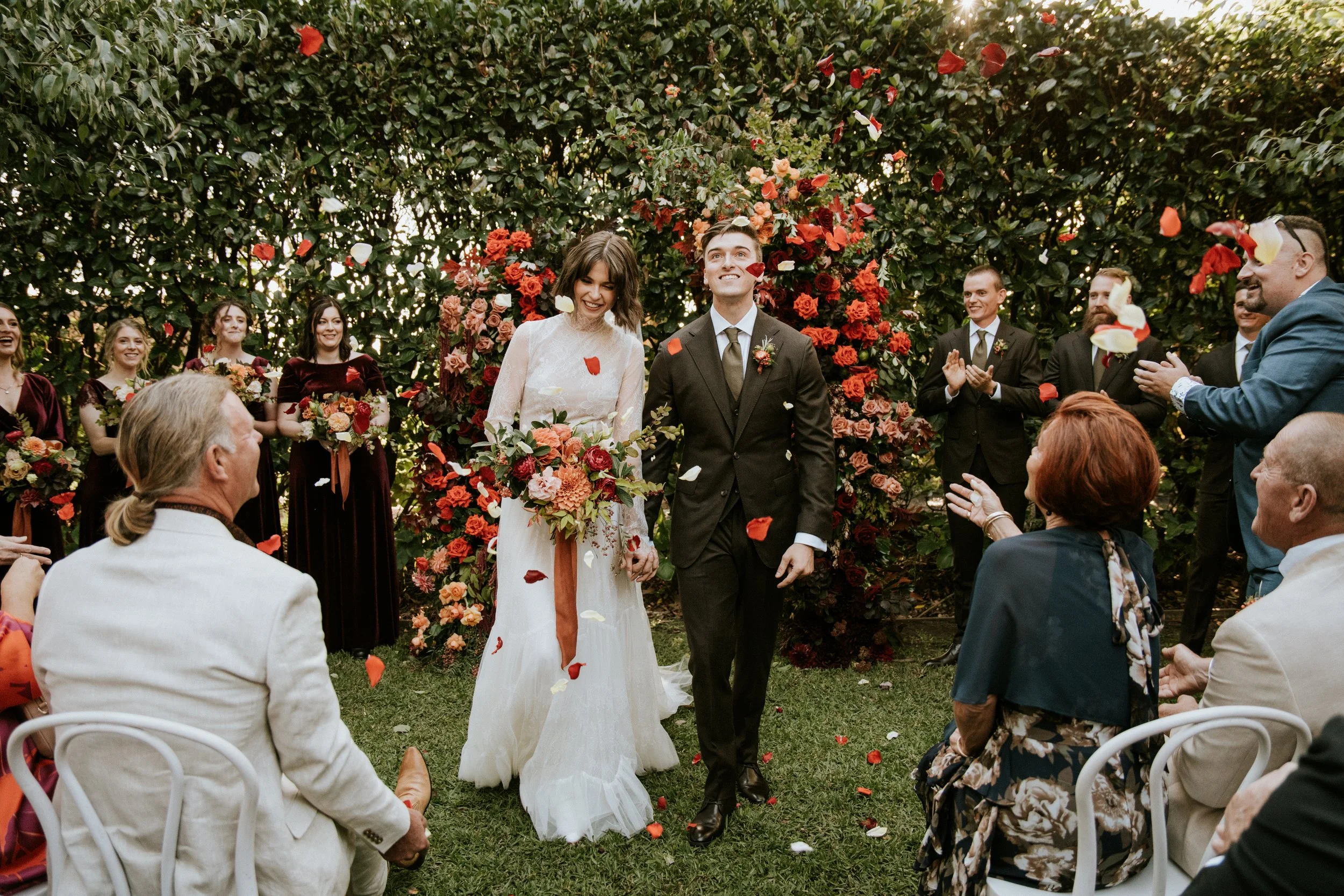
Your work is known for being bold, vibrant, and highly personalised. How do you approach designing florals that truly reflect each couple’s personality and vision?
I don’t start with flowers, I start with the couple.
Every wedding is different, so my first focus is understanding who they are, how they want the day to feel and what actually matters to them. That comes through conversations, their venue, their styling choices, and even what they’re drawn to visually.
From there, I design florals that support that overall vision, not compete with it. It’s about creating something cohesive and considered, rather than just choosing “pretty” flowers.
My work is often described as bold and vibrant, but that’s not a formula I apply to every wedding. It’s a reflection of designing with intention and confidence, and making sure the end result feels personal, not like a copy of something they’ve seen online.
At the end of the day, I want them to walk into the space and feel like it’s theirs, not just styled, but genuinely reflective of them.
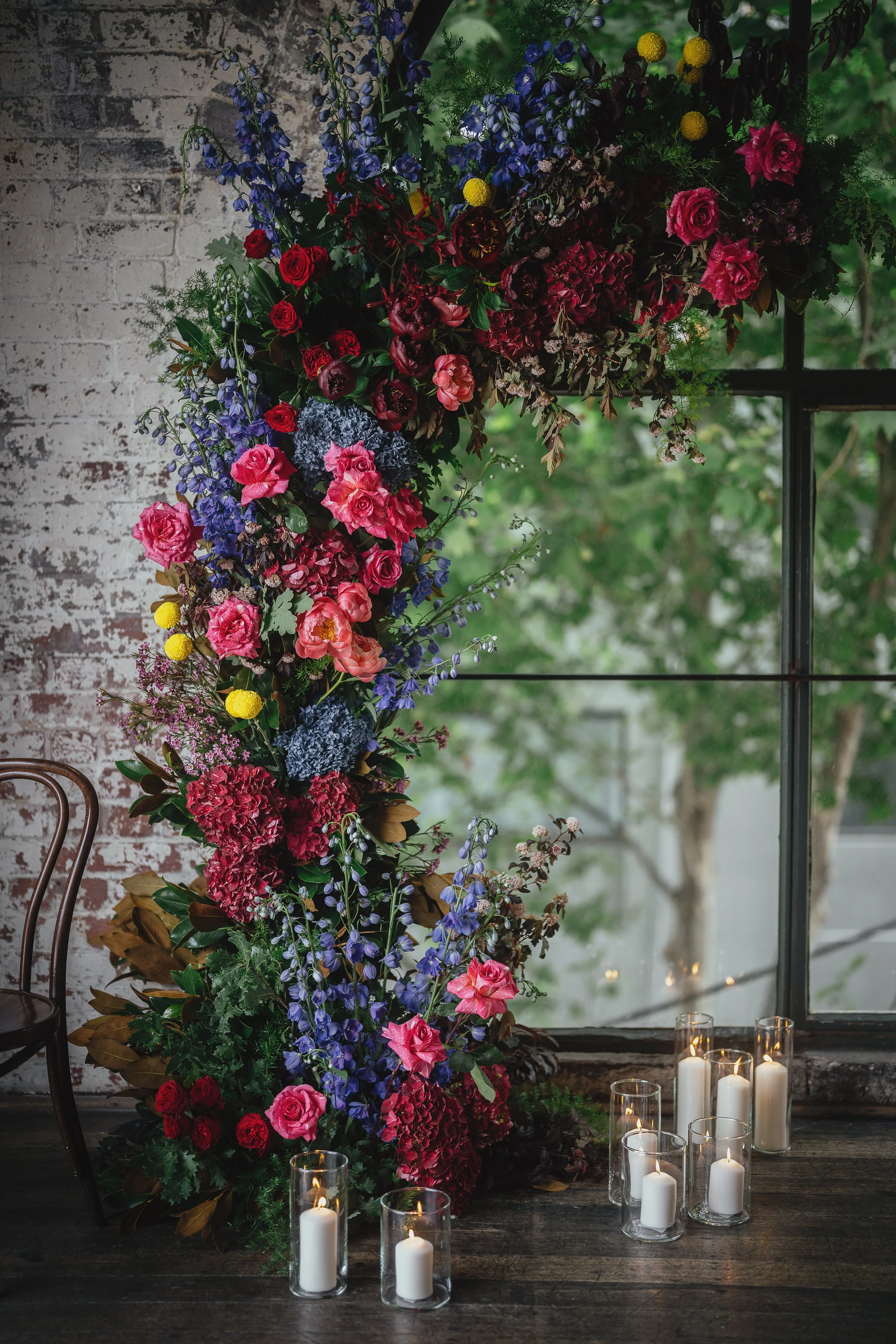
You encourage couples to “be different.” What does that look like in practice when guiding clients through their floral direction?
Encouraging couples to “be different” is really about creating space for their ideas to evolve, not replacing them with mine.
Most couples come in with a mix of inspiration, and that becomes the starting point for a conversation. We look at what they’re drawn to, what feels like them, and how that can translate into their space in a way that feels cohesive and considered.
From there, it becomes a collaborative process. I’ll bring ideas, challenge things where needed, and suggest ways to push the design further, while making sure it still feels aligned with them.
Sometimes that means refining what they already have, other times it’s introducing new elements they hadn’t considered. But it’s always a back-and-forth, not a one-way direction.
Being “different” isn’t about doing something unexpected for the sake of it, it’s about creating something that feels genuine, and that usually comes from a mix of their vision and my experience coming together.
Can you walk us through your creative process - from initial concept to installation on the wedding day?
My process always starts with understanding the couple and the overall vision for the day. That initial consultation is where we talk through their ideas, the venue, and how they want the space to feel.
From there, I put together a tailored proposal that breaks everything down into sections, along with a mood board so they can clearly visualise the direction. It’s designed to be flexible, so we can refine and adjust things as needed.
Once everything is confirmed, I move into the planning phase - sourcing flowers, coordinating logistics, and working closely with venues and other suppliers to make sure everything runs smoothly.
In the lead-up, we lock in final details like quantities, timings, and any last adjustments. Then on the day, my team and I handle everything from delivery to full installation, making sure every element is placed exactly as intended.
The goal is for the couple to walk into the space and see everything come together effortlessly, without having to think about how it got there.
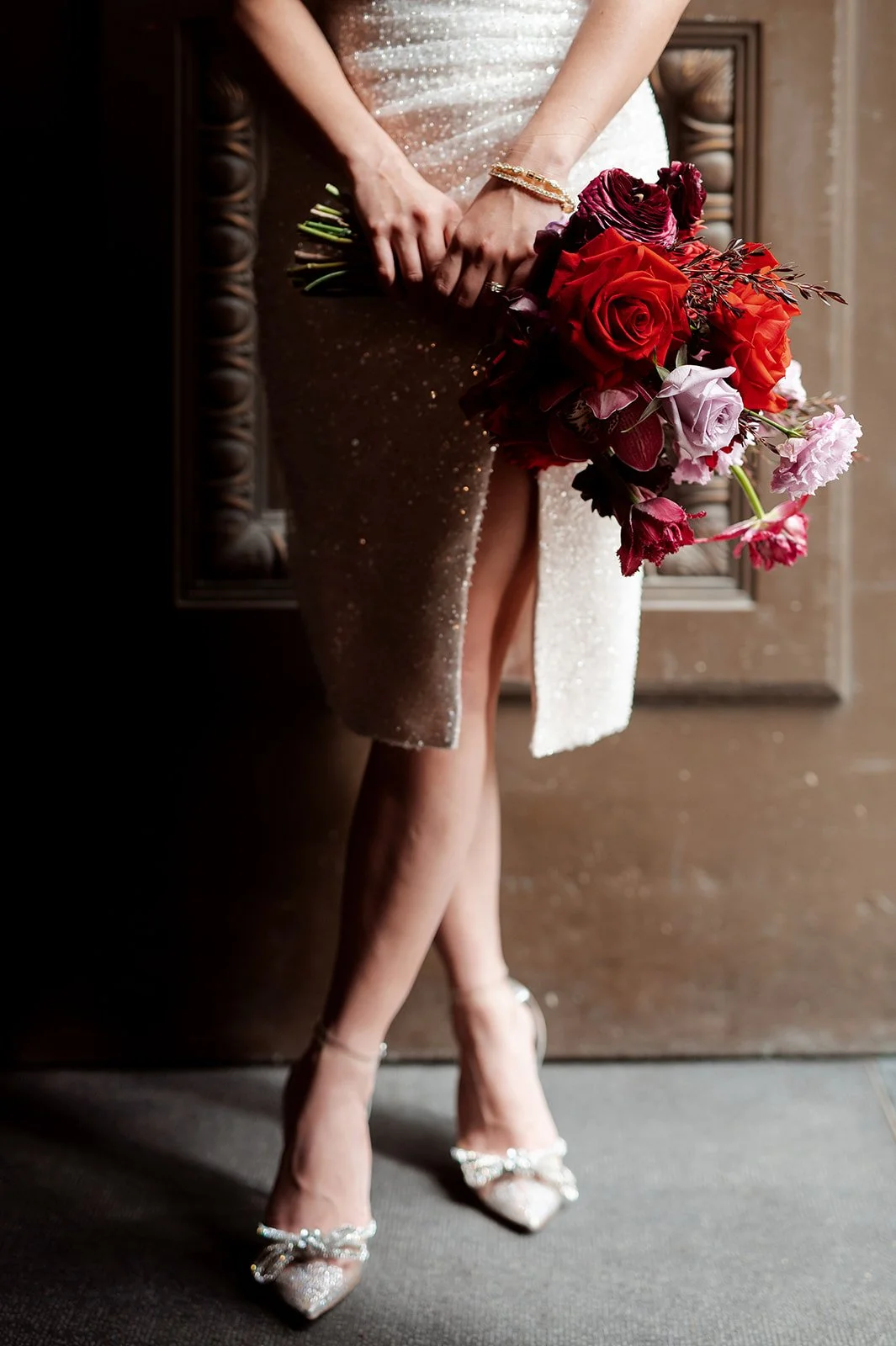
Florals play such a pivotal role in setting the tone of a wedding. How do you ensure your designs elevate the overall aesthetic and guest experience?
Florals have the ability to completely shift how a space feels, so I approach them as part of the overall design, not an add-on.
For me, it’s about looking at the full picture - the venue, layout, lighting, and styling elements, and designing florals that enhance that environment rather than compete with it. Scale, placement, and flow are just as important as the flowers themselves.
I’m always thinking about how guests will experience the space, from the moment they arrive to when they sit down. How will the space be photographed, Whether it’s a statement installation, table details, or something more subtle, every element is designed to feel intentional and connected.
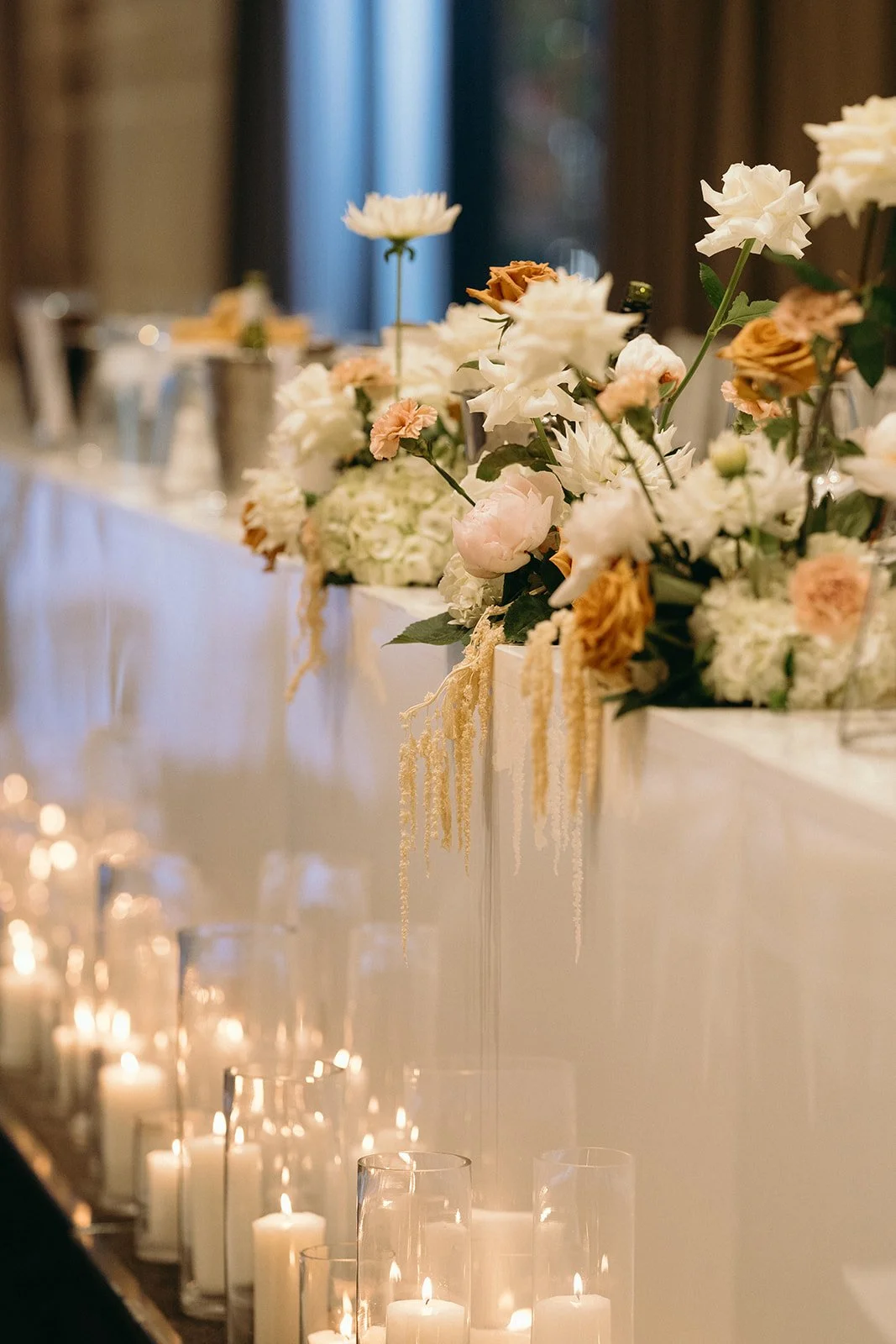
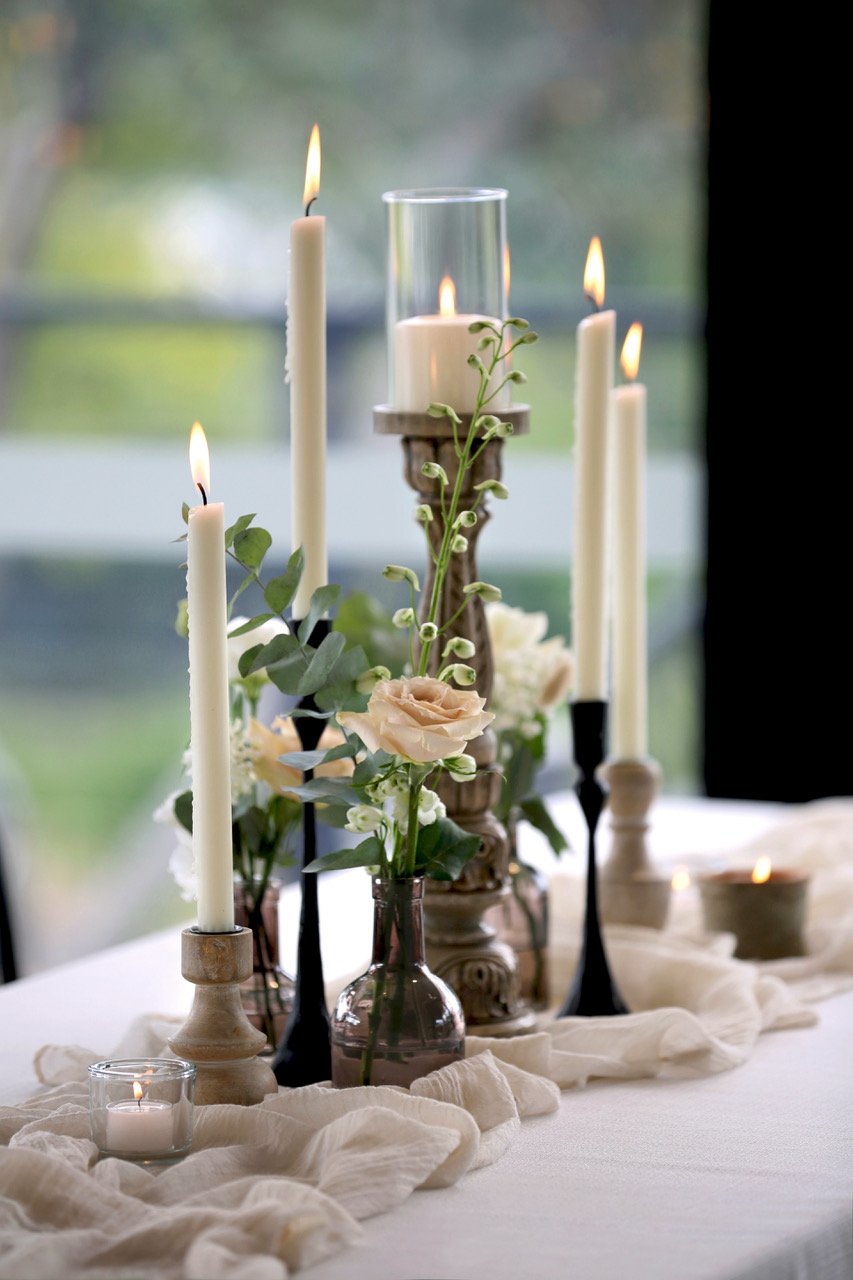
That also extends beyond florals. We often incorporate elements like candlelight to build atmosphere and soften the space, so it feels warm and inviting rather than just styled.
It’s about balance -knowing when to go bold and when to hold back so the overall look feels elevated, not overdone.
When everything is considered properly, florals don’t just look good, they help create an atmosphere that people notice, remember, and genuinely enjoy being in. Plus I love to exceed expectations!
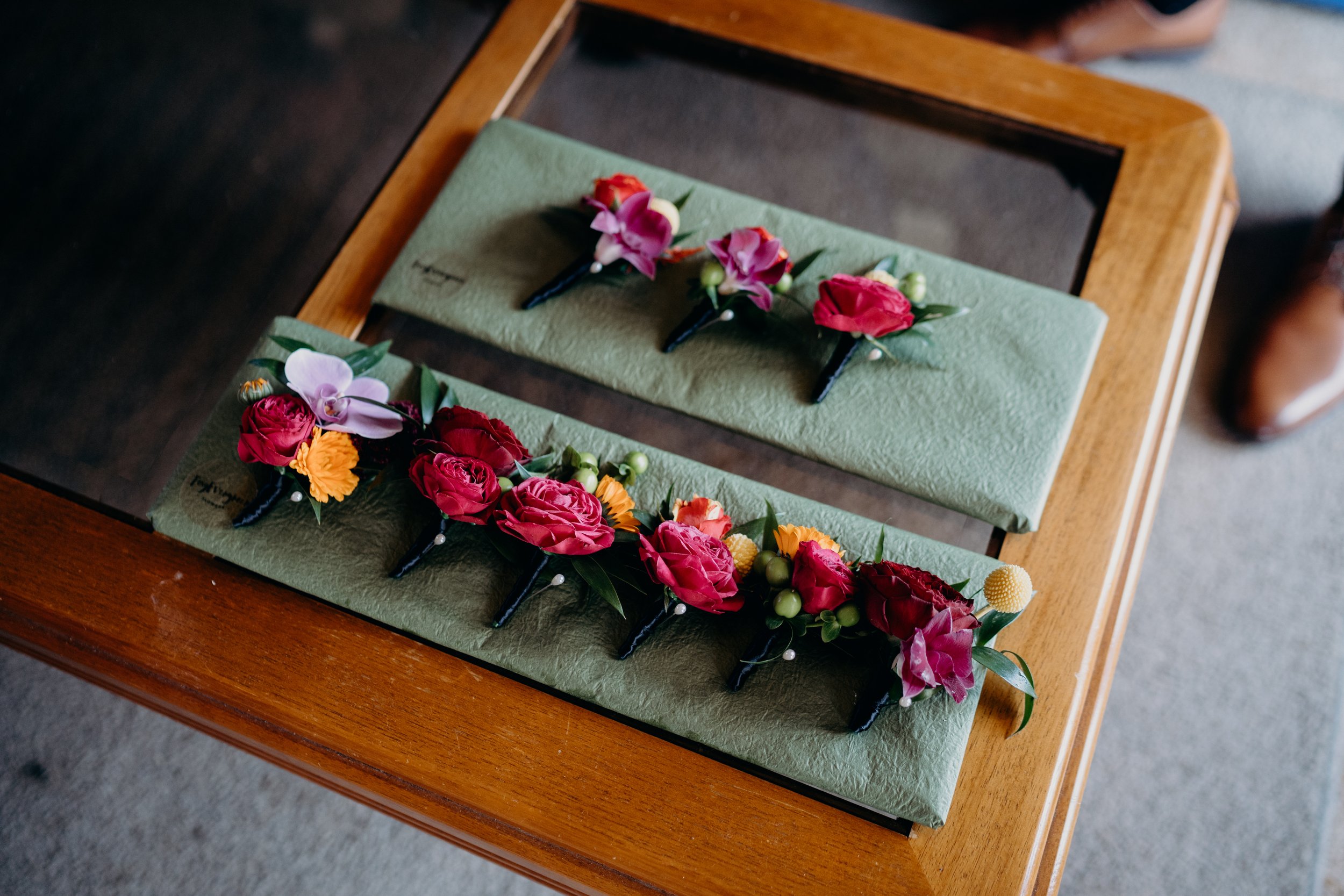
How do you balance timeless floral elements with more contemporary, trend-driven design?
For me, it’s less about chasing trends and more about designing something that will still feel right long after the day is over. I love embracing new looks, but it needs to work with the couple.
I tend to build a foundation using timeless elements -things like shape, colour balance, and proportion, because that’s what gives the design longevity. From there, I might introduce more contemporary details through texture, colour choices, or how the florals are styled within the space. Maybe it’s the adding of fruits or vegetables that make it more trending.
It’s about using trends in a considered way, rather than letting them lead the entire design.
Because every wedding is different, the balance shifts depending on the couple and the setting. Some lean more classic, others more modern, but the goal is always the same -to create something that feels current without dating quickly.
At the end of the day, I want couples to look back and still love how everything felt, not feel like it belonged to a specific moment or trend.
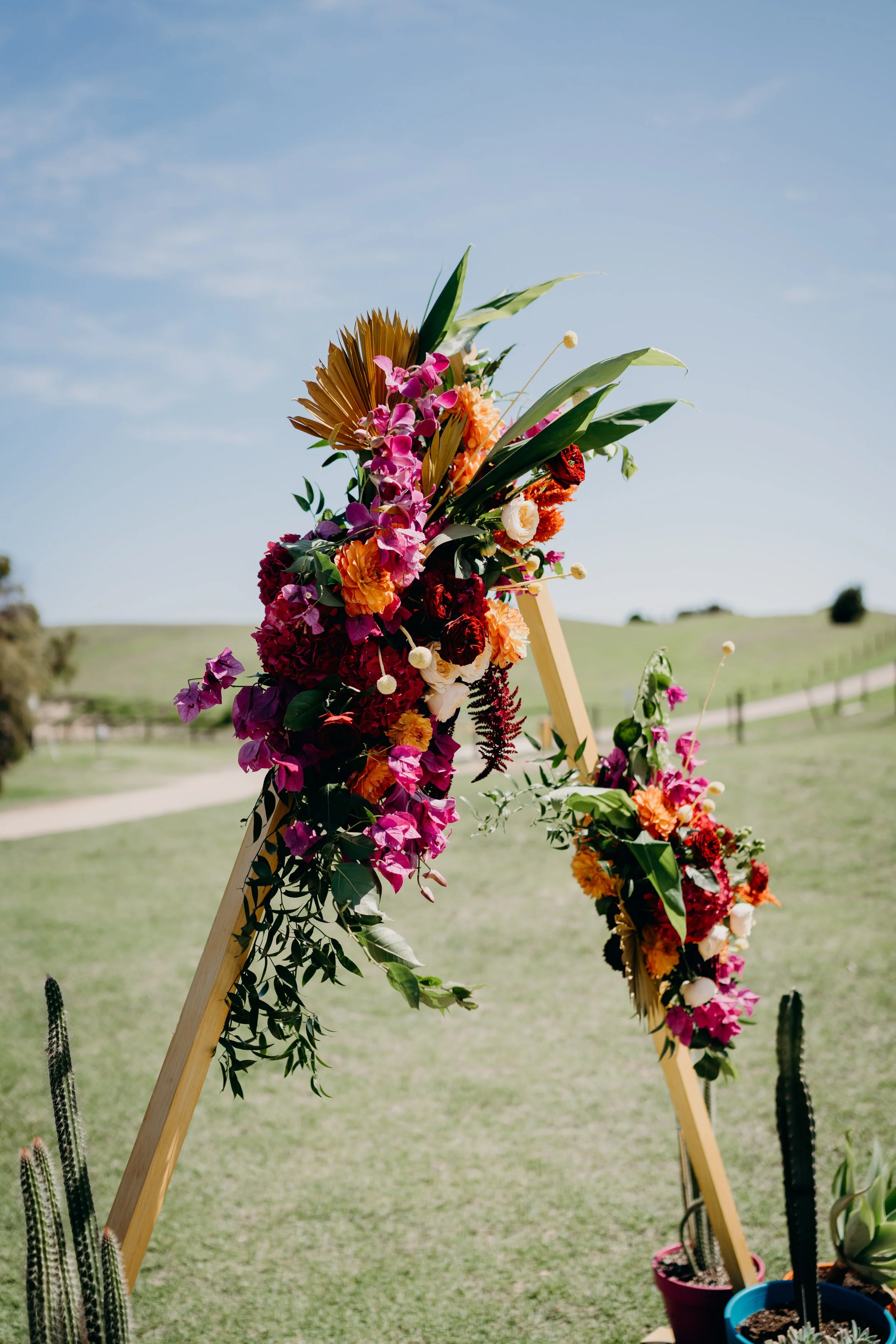
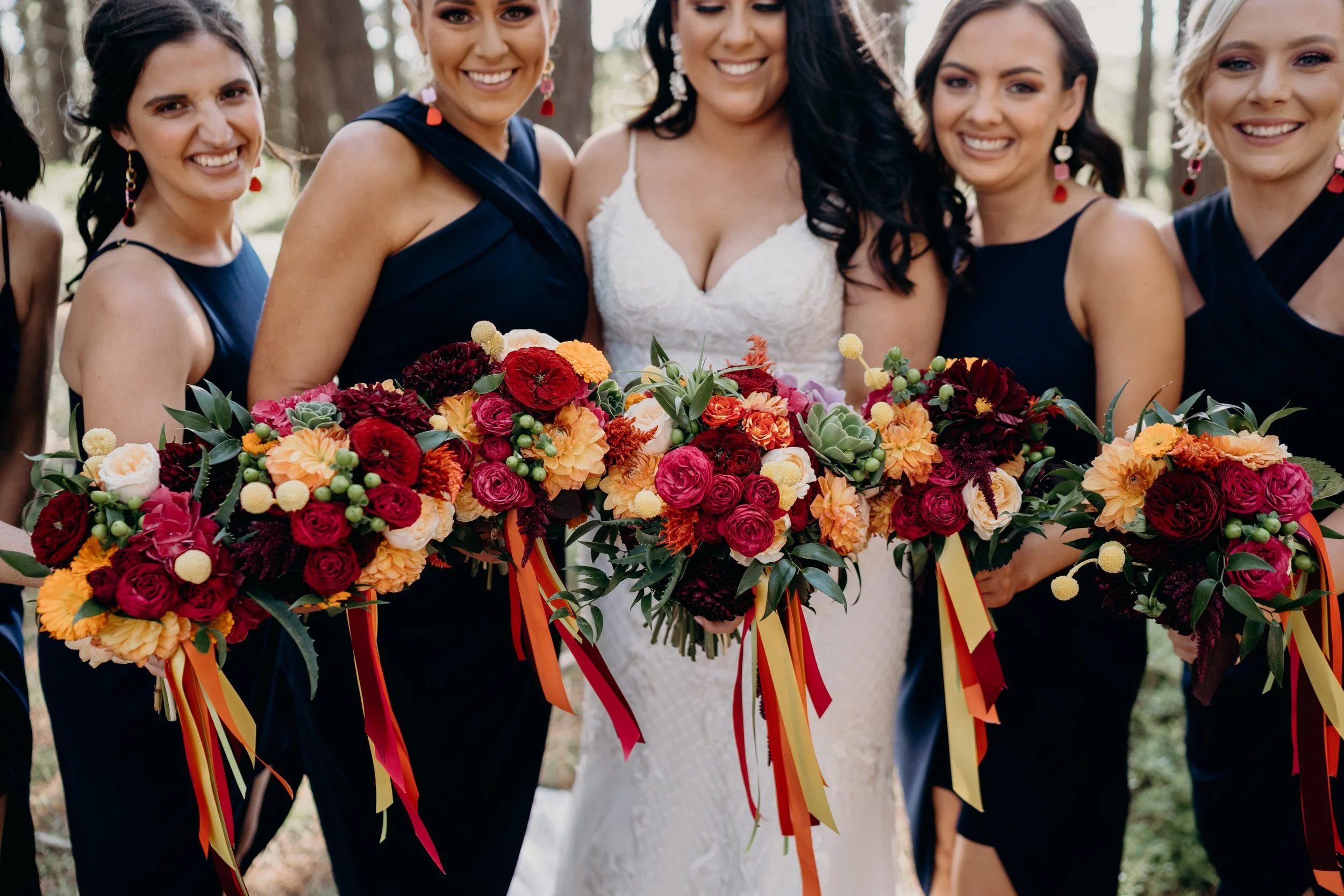
What are some of the most impactful ways couples can use florals to transform their space beyond the expected?
I love this question! One of the most impactful ways to use florals is to think beyond the table and look at the entire space.
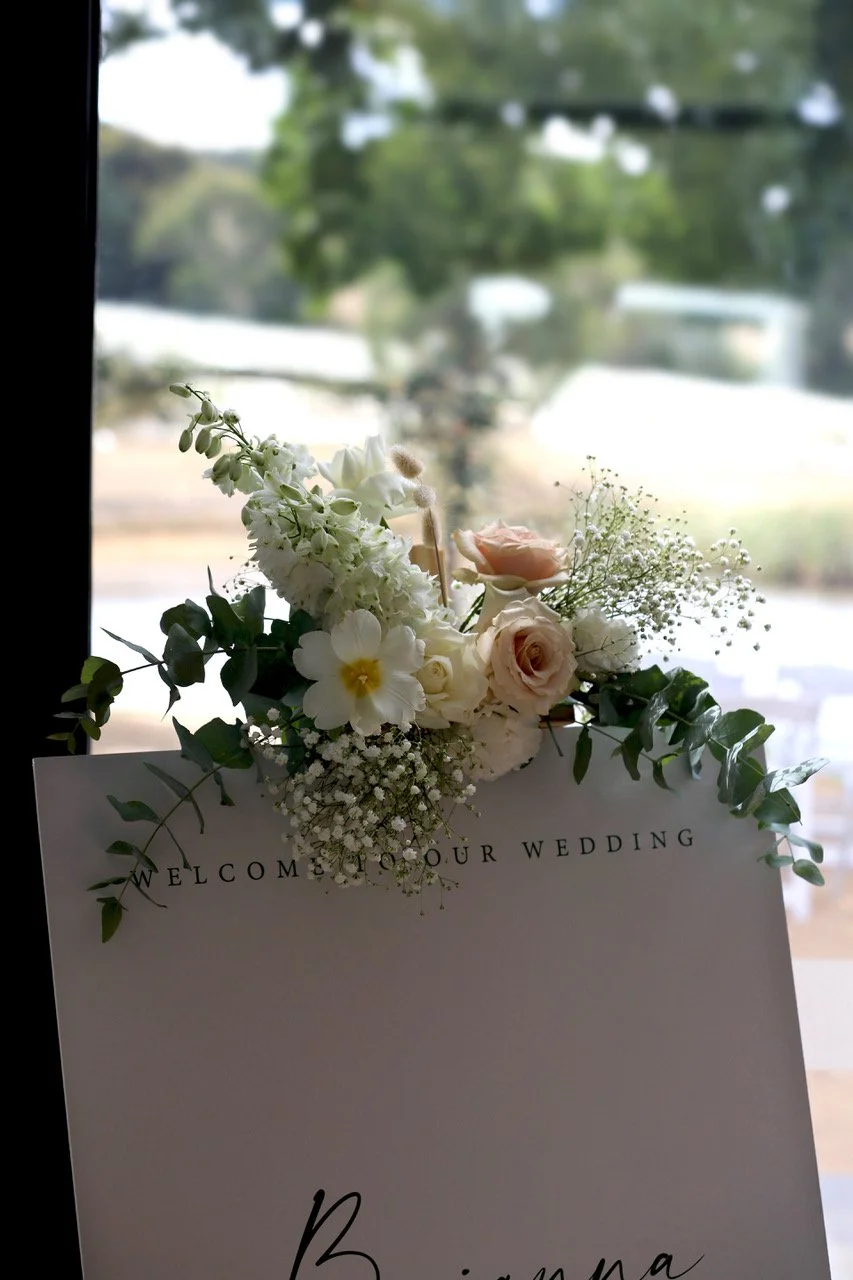
Some of the biggest transformations come from statement pieces, things like oversized welcome signs framed with large-scale floral installations, or hanging designs that draw the eye upward and completely shift the feel of a room.
I also love using florals in other areas, like bars or service spaces. Adding arrangements that drape down to the ground or extend across the front can turn something purely functional into a real feature. Wherever there is space, lets add florals!
Another approach is using flowers en masse, something we will see more and more of now that Tik Tok florists are a thing- whether that’s a cluster of arrangements working together or a repeated element throughout the space. It creates impact through scale and consistency, rather than relying on one focal point.
It really comes down to thinking about how florals interact with the space as a whole, not just where they’re traditionally expected. When that’s done well, it can completely transform the atmosphere and make the entire experience feel more immersive.
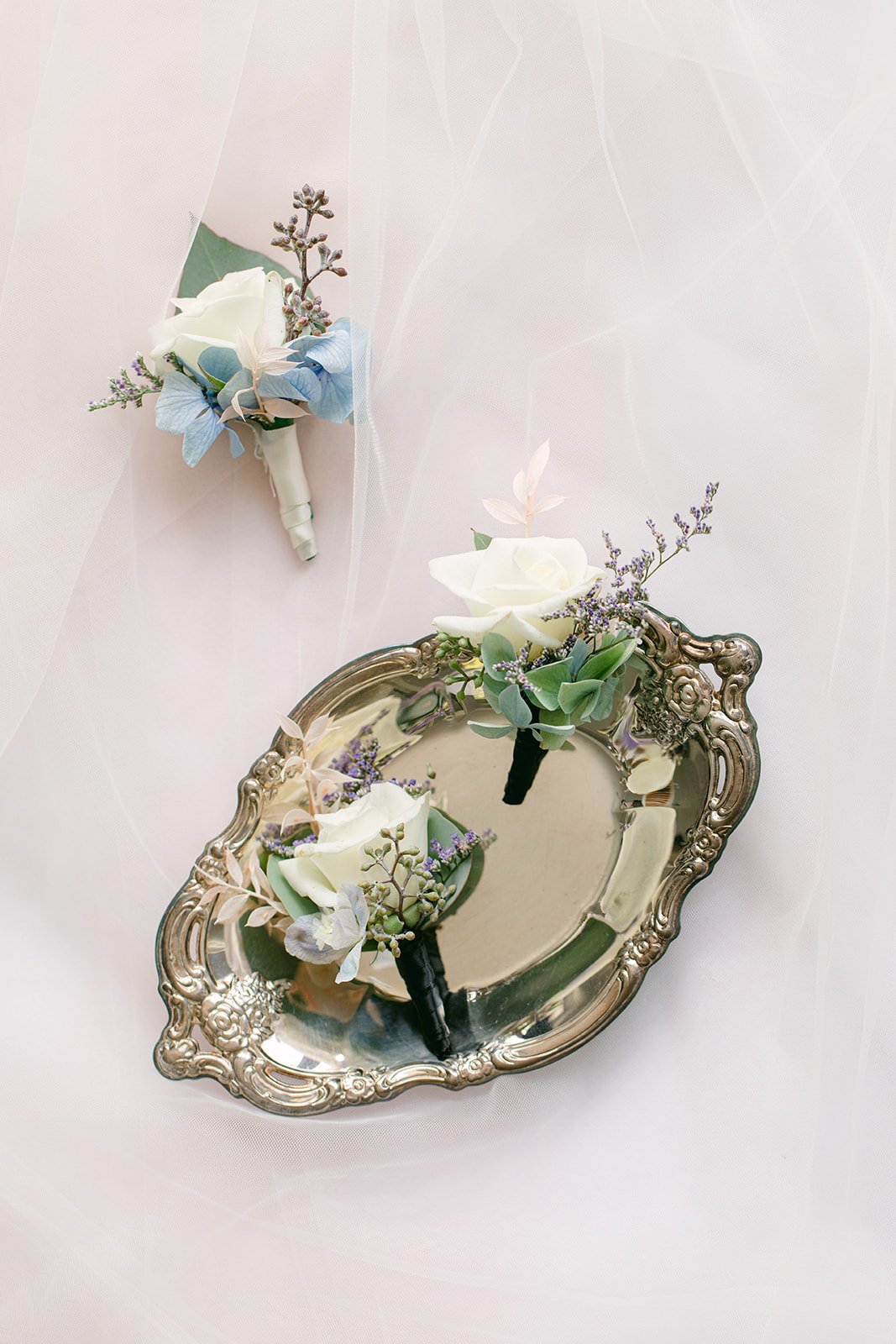
For couples who may not know where to start, how do you guide them in defining a cohesive floral vision?
A lot of couples come to me feeling exactly like that, so the process is designed to make it feel clear and manageable from the start.
We begin with a conversation around how they want the day to feel, not just how they want it to look. That usually gives us a strong starting point.
From there, I’ll guide them through their venue, colour direction, and any inspiration they’ve saved, helping to refine what’s actually working and what might need adjusting. It’s less about starting from scratch and more about shaping what’s already there into something that works.
I then bring that together into a clear proposal with a mood board, so they can see how everything connects across the different parts of the day.
Throughout the process, it stays collaborative. I’ll guide decisions, suggest ideas, and make sure everything feels aligned, but in a way that still feels like them. We can still amend the mood board right up until a month before the wedding so nothing is set in stone either. Looks change, people change that’s ok.
The goal is to take what can feel overwhelming and turn it into something really considered, cohesive, and easy to visualise.
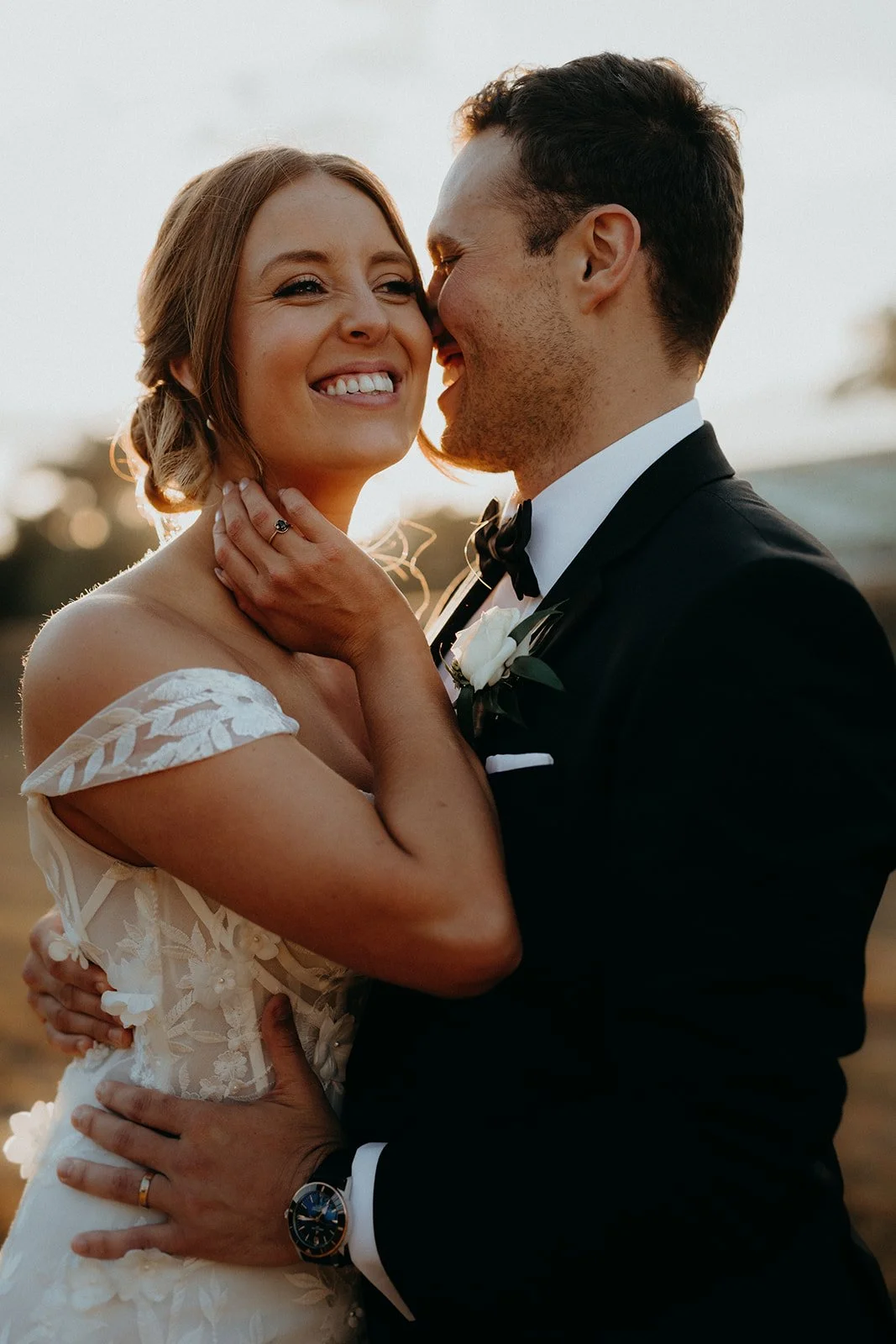
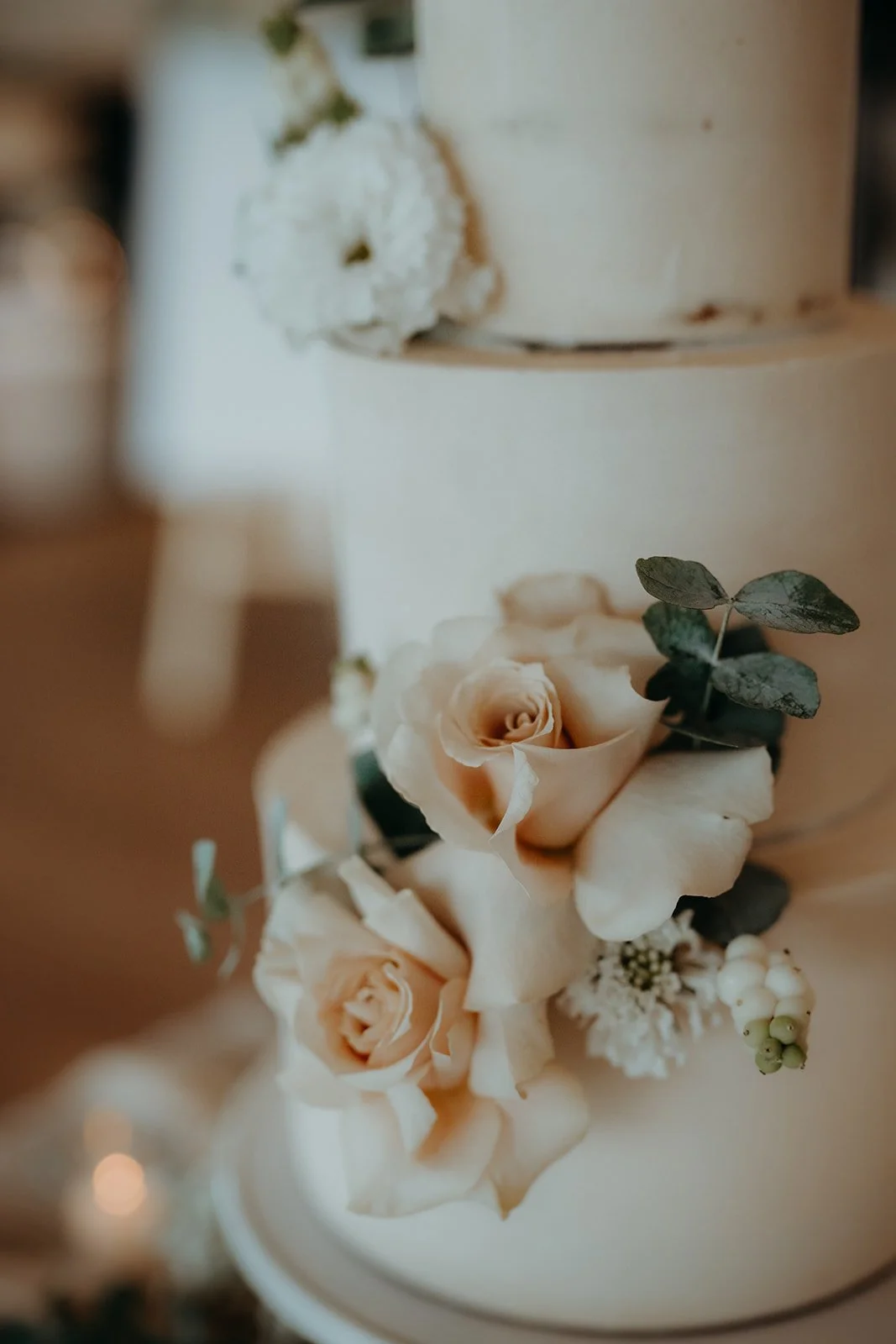
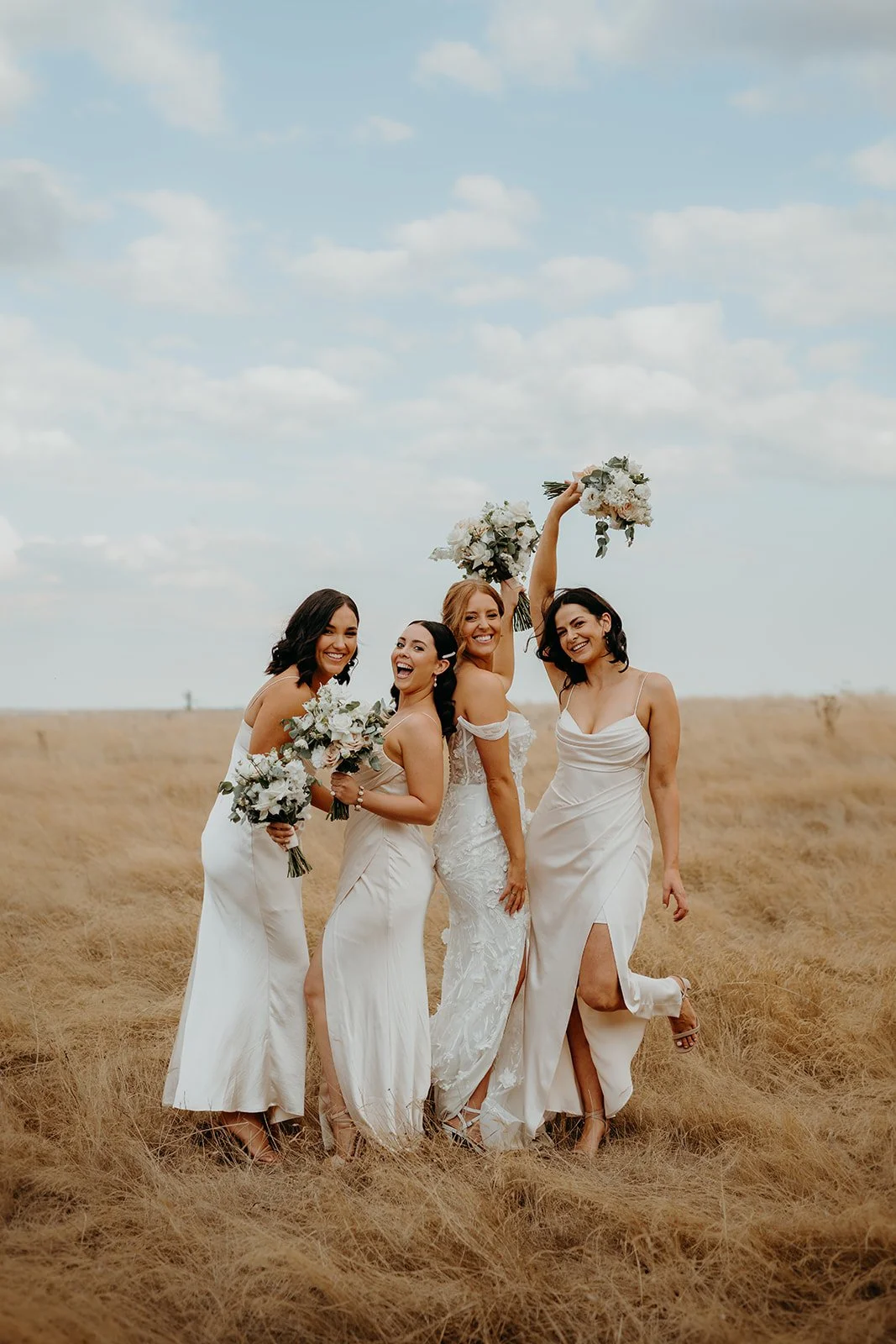
What are some standout or particularly memorable installations you’ve created, and what made them so special?
One that really stands out was a multicultural Indian and Chinese wedding at a private vineyard in Red Hill.
The brief was bold, vibrant, and full of life, and it came through in every part of the day. The ceremony centred around a traditional mandap, which we covered entirely in fresh florals - layers of pinks, reds, oranges, and yellows. It was designed to feel immersive, almost like stepping into the flowers rather than just standing beside them.
What made it so special wasn’t just the scale or the colour, it was how everything came together. The setting, the energy of the day, the music -it all worked in sync. There was this constant sense of movement and celebration, and the florals were a big part of creating that atmosphere.
It’s those kinds of weddings that really stay with you. Where the design, the culture, and the experience all align, and you’re not just styling a space, you’re part of something meaningful.
I’d create a thousand more like that if I could.

Your work spans both weddings and styled events. How does your approach differ between the two, if at all?
The core of my approach stays the same across both - it’s always about understanding the brief, designing with intention, and making sure everything feels cohesive within the space.
Where it differs is in how much creative freedom there is.
With weddings, it’s very personal. The focus is on the couple, their story, and creating something that feels like them. My role is to guide and refine their vision so it comes together in a considered and seamless way.
With styled events or brand activations, there’s often a stronger concept or theme driving the design. That can open up more room to play creatively - whether that’s pushing scale, colour, or more unexpected elements - because it’s less about personal taste and more about delivering a specific experience or message.
Both require a high level of detail and planning, but the intention behind them is slightly different. Weddings are about personal connection, while events are often about impact and storytelling on a broader level.

Looking ahead, what floral trends, textures, or colour palettes are you most excited about right now?
I’m really enjoying seeing couples become more confident with colour and less worried about sticking to one strict palette.
There’s a real shift towards mixing tones that traditionally wouldn’t have been paired together — bold, bright, slightly unexpected combinations that feel playful but still considered. That’s something I’ve always loved working with, especially for weddings that want a bit more personality.
I’m also seeing a lot more focus on texture and layering. Things like mixing fresh and more structured elements, or using flowers in a more abundant, “en masse” way to create impact rather than just individual arrangements.
Green is having a strong moment as well, but in a more intentional way. Masses of green hydrangea, layered foliage, and simple tulip work can be incredibly effective when it’s done with scale and restraint.
Beyond florals, I love how styling elements are becoming part of the overall design conversation. Fabric backdrops, linens, and of course candlelight all play a huge role in how the space feels — it’s not just about the flowers anymore, it’s about how everything works together to create atmosphere.
Overall, it’s less about following a trend and more about creating something expressive and immersive. The most exciting work is where couples are open to mixing ideas, trusting the process, and letting the design evolve into something that feels completely their own.
